

Delhi has done a lot right with its draft Electric Vehicle Policy 2026. It comes at an important moment in India’s electric mobility journey, when the focus is no longer on early adoption but on scaling up in a structured and durable way. The move from incentives in the 2020 policy to mandates and scrappage-linked measures in the draft 2026 policy reflects that progress. It shows intent, direction, and a willingness to take hard decisions.
More broadly, Delhi deserves great credit for being among the first state governments in India to move towards phasing out internal combustion engine vehicles in certain segments. In this way, it has set an example for other states.
At the same time, one area of the draft policy warrants a closer look: charging infrastructure. The current draft focuses heavily on public charging, which is undeniably important. But it omits discussion of private charging, a broad category that includes home, community, and captive (fleet-specific or dedicated use) charging. This omission may lead to bottlenecks as adoption scales up.
Charging in the draft policy
Unlike petrol or diesel vehicles, which depend on a network of fuel stations, most EV charging globally happens where vehicles are parked for long durations: at home, workplaces, or depots. In Delhi, private vehicles remain parked for most of the day, often upwards of 90 percent of the time. That makes private charging central to the transition, not peripheral.
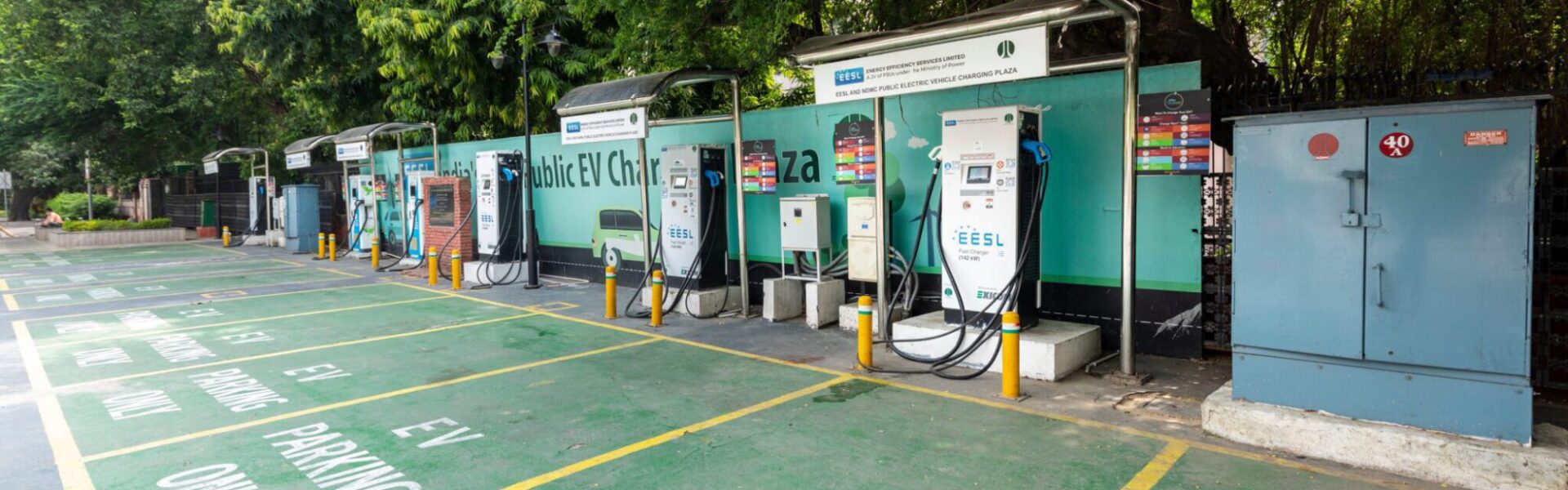
While the draft policy mentions the need for a comprehensive charging network, when it comes to actionable measures, it focuses mostly on expanding public charging stations. That is necessary, but insufficient to ensure the envisioned transition.
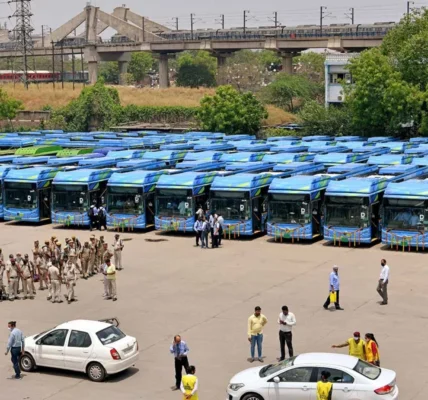
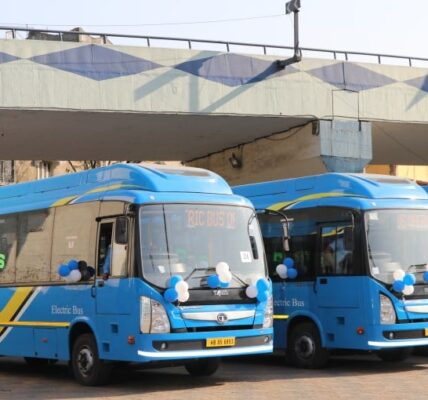
Take the example of captive charging. The policy rightly introduces electrification mandates for segments like buses, school transport, and light commercial vehicles. But these segments will rely heavily on charging within their own premises or operational hubs. Schools will need to charge buses within their compounds. Fleet operators will need access to depot-based charging. Without clear provisions to enable such charging, including for leased or hired vehicles, meeting electrification mandates will be difficult.
Smaller operators and institutions with limited space for charging will also need support. Not every school or fleet owner will have the capacity to set up charging on their own. Shared infrastructure, along with guidance from a coordinating agency, could help bridge that gap.
Then there is community charging, which is installed in group housing societies for residents and authorized visitors to charge their EVs. The draft defines it, but does little else. In a city like Delhi, where many residents live in such housing societies, this is a critical piece of the puzzle. Housing societies are often hesitant to invest in charging infrastructure due to valid concerns over cost, low initial demand, and technical upgrades like transformer capacity. While Delhi has already amended building byelaws to make newly constructed buildings EV-ready, the bigger challenge will be to retrofit existing buildings. This is where the policy can clarify how to assess demand, plan infrastructure, and scope financial and technical support.
Ensuring the right to charge
The most immediate barrier to accessing EV charging facilities, however, is faced by individual users. Today, when someone wants to install a private charger in their designated parking space, they typically need approval from their resident welfare association (RWA). In many cases, this approval is either delayed or denied, with RWAs often citing perceived safety or aesthetic issues. The outcome? People who want EVs are denied the ability to install chargers at home.
In this context, to ensure that policy ambition aligns with real-world reality, Delhi’s EV policy could enshrine the right to charge.
Also known as the right to plug, the right to charge is a legal protection that affirms the right of residents to install EV chargers in their own parking spaces, subject to reasonable safety and technical standards. Such provisions do not create a right to parking, or override legitimate safety requirements. Instead, they limit the ability of housing associations to arbitrarily delay or deny charging requests, ensuring that if someone has a designated parking space and meets reasonable requirements, they cannot be denied the ability to install a charger without a valid reason.
This is a principle that has proven effective elsewhere. In 2020, Norway prohibited housing societies from refusing charger installations without valid reasons. More recently, the European Parliament has pushed for similar rights for citizens across Member States through its Energy Performance of Buildings Directive. Several European countries have already affirmed these legal rights.
By including the right to charge in its EV policy, Delhi would reinforce the policy’s overall focus on creating more structural support for EVs by relieving one of the most common and immediate barriers faced by EV users. Moreover, the principle could be extended to community charging, especially for residents without dedicated parking. Ensuring fair and equitable access will be key as adoption increases.
From ambition to action
The draft policy is currently open for public comments. This is an important opportunity to fix these omissions. Inputs during this period can help sharpen the policy on charging by clearly outlining provisions for captive infrastructure across mandated segments, detailing implementation pathways for community charging in existing housing societies, and incorporating the right to charge. This is also the stage to clarify operational issues such as approvals, technical standards, and institutional responsibilities for expanding charging infrastructure, so that the policy is not just ambitious on paper but workable on the ground.
Delhi’s draft EV policy is far-reaching and, in many ways, trailblazing. It gets the broader strategy right and builds on the experience of the past few years. But a few important adjustments would help it deliver on its full potential. If Delhi can strengthen these aspects, especially by introducing the right to charge, it will not only improve the effectiveness of its own policy but also set a strong example for the rest of the country and beyond.