Electric Mobility Is No Longer Just Green, It Is Becoming India’s Strategic Economic Lever

The electric mobility industry today is entering a phase where strategic considerations about the larger economy are entering the discourse. The discussion is no longer solely focused on sustainability. Resilience and long-term stability are being used as markers to reevaluate market and customer priorities, influencing how mobility solutions are adopted.
It is especially interesting for markets like India, where the need for mobility is increasing alongside infrastructural development and urbanisation. Moreover, as geopolitical dynamics influence the flow of resources, components, and capital, there is an increasing emphasis on building systems that are less exposed to external volatility and more aligned with domestic capabilities.
This is where electric mobility starts to move beyond intent and into strategic relevance. India’s Electric Vehicle (EV) ecosystem has grown rapidly in recent years, with annual sales crossing 2 million units in 2024 and reaching 2.27 million in 2025.
Commercial and High-Utilisation Segments Lead EV Adoption
Adoption is being driven by high-utilisation categories such commercial vehicles, fleet operations, and two-and three-wheelers. These segments are suited to electrification since they are naturally more concerned with lifecycle performance than with upfront considerations. Electric mobility offers a compelling mix of service reliability, reduced maintenance requirements, and operational consistency, especially in urban settings.
Some of the most meaningful changes are also happening in areas that go unnoticed. Segments once considered difficult to electrify are starting to come around. Light commercial vehicles, farm machinery, construction equipment, municipal fleets, warehouse and material handling. Electric alternatives are showing up across all of these. Other areas like intra-campus mobility, port operations, and airport ground support equipment are already getting popular. While these segments may not always attract attention, their impact on the mobility ecosystem is meaningful. These vehicles work in conditions that are controlled or semi-controlled, with a high emphasis on uptime and predictable duty cycles. Electrification thus becomes more practical than personal choice as it becomes part of daily operations.
Supply Chain and Infrastructure Still Need Strengthening
Challenges remain, of course. The supply chains supporting electrification are still evolving alongside the charging infrastructure. It will take sustained attention from business and policymakers to scale them effectively and sustainably. But efforts are being made to create an ecosystem that is more resilient and scalable. Localisation, innovation, and strengthening of the value chain is helping address existing issues.
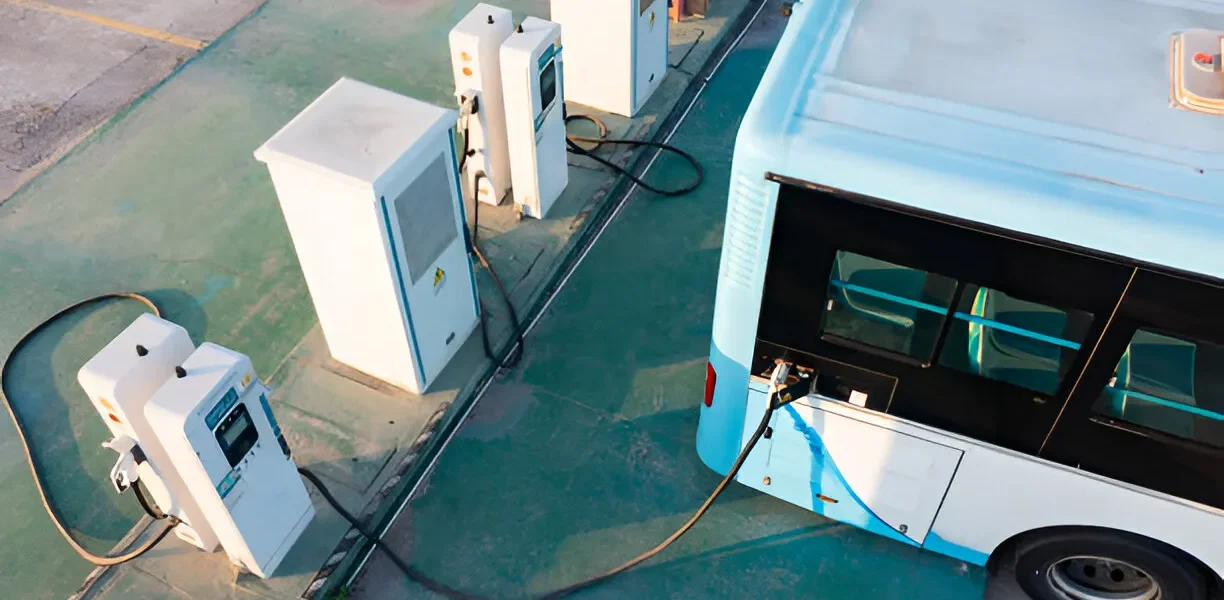
The benefits of electrification are already evident in high-impact areas like urban mobility and public transportation. Electric buses and shared mobility solutions provide greater operational predictability, lower lifespan costs, and better integration with urban infrastructure. As cities work to deliver better services, manage congestion, and improve efficiency, these benefits are clearly visible.
Mobility systems remain closely linked to global supply chains and energy networks. The need to diversify energy sources and reduce exposure to external volatility is increasing as disruptions are becoming frequent. Electric mobility is not only an eco-friendly solution. It is also emerging as a strategic lever to create systems that are more flexible and future-proof.
India Remains a Bright Spot in Global EV Market
Recent adoption trends also reflect a clear shift in market sentiment with India’s electric vehicle ecosystem demonstrating steady and resilient growth. Government policy support, the growing use-case adoption, and continued investments from both domestic and global manufacturers are positioning India as a rare high-growth EV market. While automakers globally are scaling back EV investments, the broader EV industry remain optimistic about the Indian market. It is being viewed as a long-term growth market supported by strong policy backing and increasing consumer acceptance.
For manufacturers, this evolving landscape is redefining how mobility solutions are designed and delivered. The focus is shifting from only standalone products to integrated, application-specific solutions. Electrification in a bus, a delivery vehicle, or an industrial application requires a deeper understanding of usage patterns, energy management, and lifecycle optimisation. What ultimately matters is how reliably these solutions perform in everyday operations.
Charging Infrastructure Will Define the Next Phase
The pace of the growth will also affect the capacity to deliver this reliability at scale. This shift will be made possible in large part by infrastructure. India’s public charging infrastructure is projected to grow from around 75,000 charging points in 2024 to approximately 375,000 by 2030. This will require an addition of nearly 50,000 charging points annually to support the rising EV adoption.
As the industry moves forward, mobility decisions will increasingly be shaped by how well they align with broader economic priorities. The emphasis on resilience, stability, and long-term value is already influencing how technologies are evaluated and adopted. What is changing is the role electric mobility plays within this ecosystem. It is no longer just a sustainability-driven alternative. It is turning into a workable, scalable, and strategically significant solution, particularly in markets where dependability, efficiency, and predictability are crucial.