

India’s electric vehicle (EV) ecosystem is rapidly developing. One of the key parts of the nation’s green mobility journey is charging infrastructure. TATA.ev’s recently published India Charging Report 2025 states that the country’s climate goals, urban pollution issues, and energy security needs make the shift to EVs essential, not just a goal.
As of 2025, EVs have been registered in over 65% of India’s pin codes. A staggering 84% of EV owners now use their electric cars as their main mode of transport, up from 74% in 2023. On average, EVs are driving 1,600 km monthly, which is 40% more than internal combustion engine (ICE) vehicles. This is largely due to their lower running costs and improving public charging infrastructure.
TATA.ev’s report shows that EV users drive their vehicles on 27 days a month. This is 35% more often than ICE owners. With 95% of India’s motorable roads now accessible for EVs, the previously widespread range anxiety is decreasing. Notably, half of TATA.ev users have completed long-distance trips of 500 km or more on well-known routes like Delhi-Manali and Mumbai-Goa, with regular charging stops at restaurants and dhabas.
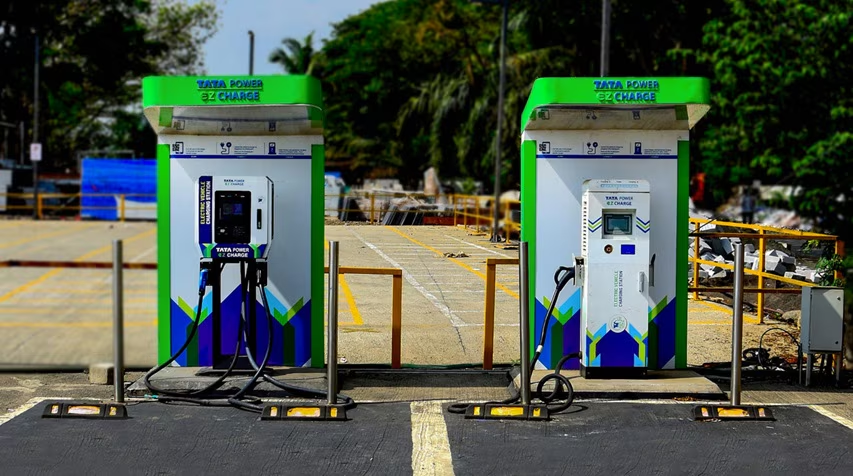
India has seen a four-fold increase in public charging stations, reaching 24,000 chargers across highways and urban areas. Using detailed spatial mapping, TATA.ev has pinpointed gaps in fast-charging coverage and identified growth opportunities. Currently, 91% of national highways have a fast charger within a 50 km radius. States like Karnataka, Delhi, Kerala, and Punjab have 100% coverage for NH fast chargers.