
As it enters the electric vehicle market, VFS is rethinking its entire processes and operations

Cost effectiveness and service excellence are the pillars that shape VFS’ approach to vehicle conversion. Dedicated to providing its customers with exceptional products, the company relentlessly innovates and invests in its processes to make its offering that much better. Alexander White, Managing Director, tells us more about the core strategies that have led VFS to success.
“VFS stands for Victoria Forge (Southampton), Ltd which is how the business first started 31 years ago, before evolving into the biggest UK converter of 3.5-ton commercial vehicles,” he begins. “The business operates across two sites, with the main one in Southampton, strategically located next to the former Ford Transit factory, a partnership that fueled much of our early growth. We started out converting postal vans for Australia Post and modifying chassis so that ambulance bodies could be fitted on top. From 1996 to around 2002, we were doing a lot of work for utility companies, fitting racking systems in vans and working with Ford Special Vehicle Operations on 12- and 17-seater minibuses. We don’t do any of that now, but that’s how the business was born. In 1998, we formed a partnership with Scattolini to supply their bodies to the UK market. The Ford One Stop Shop was born the same year and is an OEM program through which we build vehicles for the Ford network, sold directly through their dealerships. Another significant year was 2009, when VFS was officially acquired by the Scattolini Group, transitioning away from private ownership.”
Rather than attempting to do everything for everyone, VFS has always operated as a specialist volume producer running structured production lines, not a coachbuilder crafting individual bespoke vehicles. By focusing on volume, the company is empowered to move a significant number of vehicles through the plant. In addition, VFS operates two depots: the South depot covers approximately 230,000 square feet of manufacturing and storage, and the North depot, which opened in 2017, adds a further 60,000 square feet. Although all products are manufactured at both sites, the North depot has become a specialist in Luton box van production. That facility was purpose-built when VFS won a significant contract from a competitor and needed the dedicated capacity to fulfil it.
Today, the company offers three core products alongside a range of special projects. For instance, the team works with the RNLI to produce all the organization’s beach rescue and crew cab vehicles and builds refrigerated vehicles under the Scattocold brand launched in the UK last year. Traffic management vehicles are another key offering for VFS, who specializes in building the body and taking in the chassis to convert it into a commercial vehicle tailored to the customer’s exact specification. For those vehicles, the body is produced by Scattolini before VFS completes the conversion. Everything else is designed and produced entirely in-house.

As electrification continues to redefine the commercial vehicle sector, VFS has been adapting its operations to meet that shift. “I think we are going to see a significant move towards the electric vehicle (EV) market in the next two years. The new EVs coming online now have better range and more competitive pricing, which makes them a strong option, particularly for local authorities and last-mile delivery operators. We have trained staff and are already building EVs, though the numbers remain quite low compared to the broader market. Currently, we are working with Ford on the new City Transit, which will be introduced towards the end of the year, and we will be building more electric vehicles from Q4 onwards. The build process is relatively similar for EVs, though there is slightly more work around things like side protection due to the battery placement, which slightly increases build time,” Alexander informs.
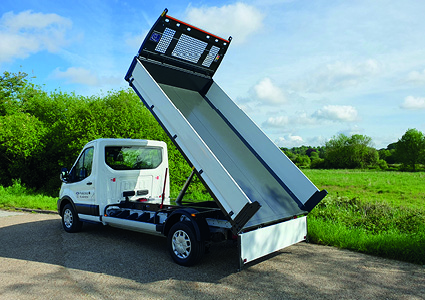
Alongside the shift to electrification, VFS has also been investing heavily in IT infrastructure, AI and a new ERP system to improve efficiency and stay on top of growing demand. But the most transformative change has been a deliberate effort to rationalize the business from the inside out, an initiative driven by Alexander himself. “We have 30 years of accumulated information and products to work through. For a long time, we had a mentality of doing anything for anyone, but we have been working to change that to be more strategic in our approach, designing products for the end market rather than letting the end market dictate the product to us. A good example is tipper truck cages. We were fitting around 50 different versions of those cages for local authorities and waste and grounds maintenance customers. In the last five months, we have designed a universal modular cage system that replaces all 50 variants with just two that we can adapt to fit any vehicle. From a purchasing, stocking and pricing perspective, it is much easier.
“That rationalization is now moving through the whole business, as we continue identifying the best products we can supply, ones that match the quality of the vehicle but are streamlined enough to produce more efficiently than before. We are also moving towards much more line-fitment options during the production process itself, rather than completing the vehicle and then adding extras afterwards. Because we had so many variants, it was very difficult to have the right components in stock at the right time. Our goal is to complete more during the initial production run so that when a vehicle comes off the line, it is fully finished,” Alexander concludes.